Bharatnatyam
History and Origins
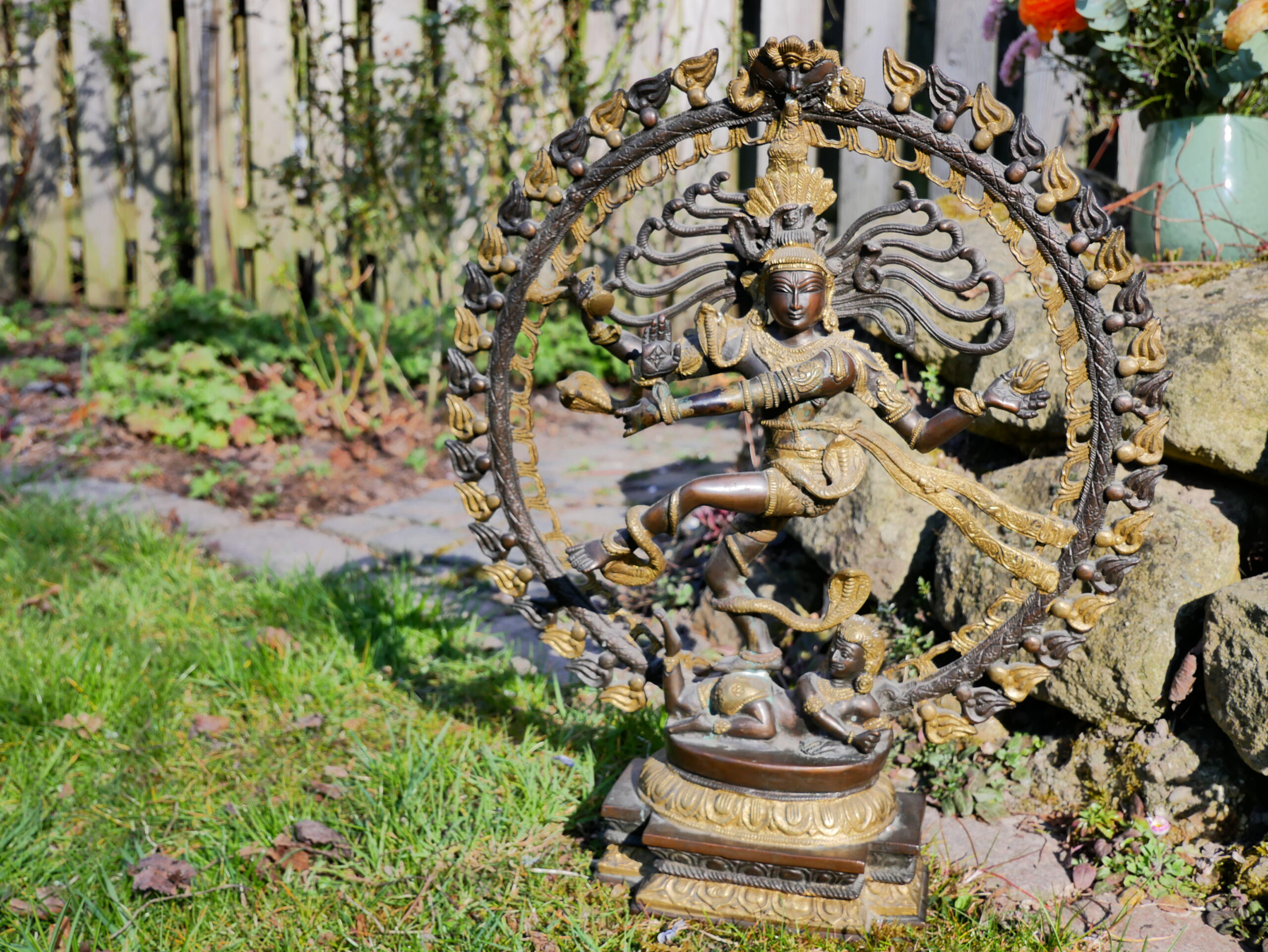
Bharatnatyam, one of India’s oldest classical dance forms, originated over 2,000 years ago in Tamil Nadu’s temples. Performed by Devadasis as a devotional offering, it narrates mythological stories of gods like Shiva and Krishna. The dance combines Bhava (expression), Raga (melody), Tala (rhythm), and Natya (dramatic art), as codified in the Natya Shastra. Revived in the 20th century, Bharatnatyam transitioned to the stage through pioneers like Rukmini Devi Arundale.
Key Aspects
Nritta: It’s a pure technical dance focussing on rhythm and precision.
Nritya: This is an expressive dance narrating stories with hand gestures (mudras) and facial expressions (bhavas).
Natya: It comprises dramatic storytelling integrating Nritta and Nritya.
Fundamentals
Adavus: These are the basic steps which combine footwork, hand gestures and body postures.
Mudras: These are the symbolic hand gestures for storytelling.
Aramandi: It’s a signature step with the half-sitting posture.
Abhinaya: Facial expressions and eye movements for emotions.
Music: It is based on Carnatic music and rhythmic talas.
Modern relevance
Interestingly, Bharatnatyam bridges tradition and modernity.
Preserves cultural heritage and spiritual essesnce.
Promotes physical and mental well-being.
Gains global recognition at festivals and events.
Adapts through fusion and contemporary styles.
Bharatnatyam is a timeless art form that continues to inspire as it evolves, celebrating India’s cultural legacy and artistic innovation.

To understand Bharatnatyam and it’s mudras takes some good time. But in three days Abhi taught them so simple and easy way that children could remember mudras. And learn whole Guru Bhrahma Guru Vishnu shloka in three days. This was complete new experience to these Adiwasi tribe children. By children’s opinion they felt free and stressless to learn from her. Also her way of teaching which was created by her was unique.
Thank you very much for giving children this experience which they never had it before.
Pramila Kansare
Manager at Creative Learning Centre, India
© 2026 Sanskriti School of Arts


